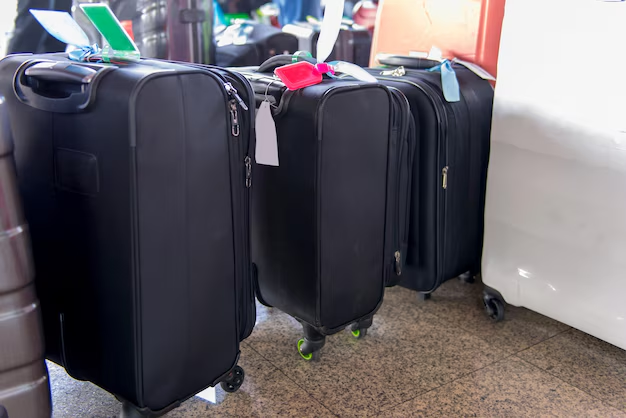
Lost Your Luggage? How Unclaimed Airline Baggage Really Works (and What You Can Do About It)
Few travel moments are more stressful than watching the baggage carousel slow to a stop while your suitcase is nowhere in sight. Unclaimed airline baggage can feel like a mystery—but the process behind it is more structured (and time‑sensitive) than most travelers realize.
Understanding what happens to your bag, how compensation works, and what rights you have can save you money, protect your valuables, and even influence the financial tools you choose before your next trip.
What Counts as “Unclaimed” Airline Baggage?
Airlines use a few key terms that are easy to mix up:
- Delayed baggage – Your bag didn’t arrive with you, but the airline still expects to deliver it.
- Lost baggage – The airline considers the bag permanently lost, usually after 21 days for international flights (timeframes can vary by airline and country).
- Unclaimed baggage – A bag that reaches a destination, but no one picks it up or the owner can’t be identified.
Most “lost” luggage actually starts as delayed or temporarily unclaimed. In many cases, bags are found and delivered within 24–72 hours.
What Happens to Unclaimed Airline Baggage?
Once a bag is separated from its owner, it moves through several stages:
1. Tracing and Matching
Airlines first try to match the bag to a missing luggage report:
- They check baggage tags in the system.
- They open the suitcase (when necessary) to look for identification inside.
- They coordinate with other airports and carriers if you had connections.
If you never filed a missing bag report, this step is harder—which is one reason reporting immediately is critical.
2. Storage Period
If the airline can’t match the bag to a passenger:
- It’s stored in a holding area, typically for 30–90 days, depending on the airline and country.
- During this time, the airline (and sometimes the airport) continues efforts to locate the owner.
3. Compensation and Ownership Transfer
Once a bag is declared permanently lost or unclaimed:
- Airlines may compensate the passenger, up to legal or contractual limits.
- After a set period, ownership of the baggage and contents may transfer to the airline or a third‑party vendor, subject to local law.
In some regions, unclaimed baggage is:
- Auctioned off
- Sold to specialized resellers
- Donated to charity or recycled if it’s not sellable
This is how certain well‑known “unclaimed baggage” stores obtain inventory.
What Are You Entitled To If Your Bag Goes Missing?
Your rights depend on:
- Where you’re flying (domestic vs. international)
- Which airline you’re using
- What you can prove was in your luggage
In general, you may be eligible for:
- Reimbursement for essentials while your bag is delayed (toiletries, basic clothing)
- Compensation for lost bags up to a capped amount
- Possible refund of baggage fees if the airline never delivers your bag
Important nuances:
- Airlines often exclude or severely limit coverage for high‑value items like jewelry, electronics, cash, or important documents in checked bags.
- You may need receipts or proof of value for expensive items.
- Compensation is usually based on the actual value, not the new replacement cost.
This is where travel insurance and even the right credit card can be powerful tools.
How to Protect Yourself Before You Fly
A few simple steps can dramatically reduce the financial and emotional fallout of unclaimed baggage:
1. Pack Smarter
- Keep medication, documents, keys, cash, and electronics in your carry‑on.
- Use a luggage tag with your name, phone, and email—inside and outside the bag.
- Consider a GPS luggage tracker for high‑value trips.
2. Use the Right Financial Tools
Some credit cards offer:
- Trip delay and baggage delay coverage
- Lost luggage reimbursement
- Travel accident and interruption insurance
Paying for your ticket with a card that includes travel protections can help close the gap between what the airline pays and what you actually lose. This can be especially helpful if:
- You travel with business equipment
- You’re moving or relocating
- You’re flying with costly items like pet supplies, car seats, or specialty gear
3. Consider Travel Insurance
Standalone travel insurance policies may offer:
- Higher baggage loss limits
- Coverage for delays, theft, and damage
- Better support if you run into major disruptions
For frequent travelers, especially families, this can be more cost‑effective than replacing luggage contents out of pocket.
What to Do Immediately If Your Bag Doesn’t Arrive
If your bag doesn’t show up at the carousel:
Go to the airline’s baggage desk right away.
File a Property Irregularity Report (PIR) or the airline’s equivalent.Provide detailed descriptions.
- Bag color, size, brand, and any unique markings
- A basic list of what’s inside (clothes, shoes, baby items, pet supplies, etc.)
Keep all documents.
- Boarding pass
- Bag tags
- Receipts for checked baggage fees
- Receipts for essentials you buy while waiting
Ask about reimbursement policies.
Clarify what the airline covers for delays versus permanent loss.Follow up in writing.
Email the airline’s customer service with your reference number so there’s a clear paper trail.
If the loss pushes your budget over the edge—say you need to replace clothes, toiletries, and maybe a car seat or stroller—the situation can quickly become financial as well as logistical.
When a Missing Bag Becomes a Money Problem
Unplanned expenses from a lost or unclaimed bag can hit hard, especially if you’re already managing:
- Credit card debt
- Tight monthly budgets
- Car payments or auto insurance costs
- Pet care expenses (boarding, vet bills, special travel crates)
If an airline loss spirals into broader money stress, it may be time to explore:
- Emergency financial assistance programs (local charities, community grants, or disaster relief if you’re stranded)
- Government aid options if the issue compounds existing hardships (like job loss or medical bills)
- Debt relief tools such as:
- Balance transfer or low‑APR credit cards
- Structured debt management plans
- Talking to a nonprofit credit counselor
These aren’t just “big problems” solutions; they’re practical tools that can restore breathing room after a run of bad luck—lost bags included.
Planning ahead with the right credit card, travel insurance, and a basic emergency fund can transform an unclaimed baggage disaster into an inconvenience instead of a crisis.
Related High‑Value Topics to Explore Next
Here’s a quick guide to related areas that often come up when dealing with unclaimed baggage, unexpected expenses, and travel disruptions:
💳 Travel Credit Cards & Protections
- Cards with baggage delay/loss coverage
- Trip interruption and cancellation benefits
- Reward points for flights and hotels
��� Debt Relief & Credit Solutions
- Balance transfer credit cards
- Debt consolidation and management plans
- Credit score repair and monitoring
🏛️ Government & Community Aid Programs
- Emergency financial assistance for stranded travelers
- Short‑term housing or transport support
- Consumer protection and complaint channels
🚗 Automotive & Travel Logistics
- Rental car insurance and coverage gaps
- Roadside assistance memberships
- How missing bags affect car seats, strollers, or gear
🐶 🐱 Traveling With Cats & Dogs
- Airline pet policies and carrier requirements
- Protecting pet supplies and medications in transit
- Emergency vet care planning while away from home
🧳 Travel Insurance & Risk Management
- Baggage coverage limits and exclusions
- Single‑trip vs. annual travel policies
- How to document losses for faster claims
Using these tools together—smart packing, travel‑friendly financial products, and awareness of your rights—can help you stay in control, even when your luggage goes on an unplanned trip without you.