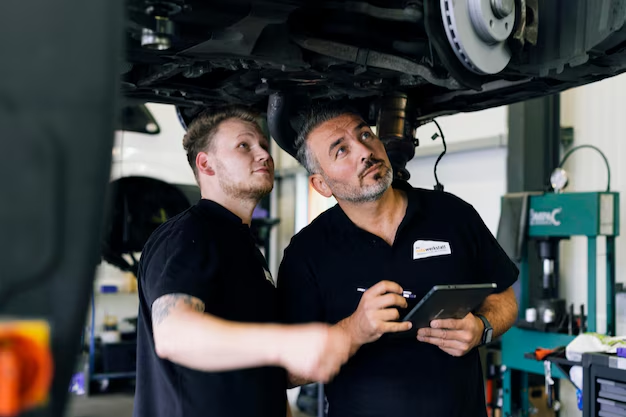
Thinking About a High-Mileage Used Car? Here’s What Mechanics Want You To Know
You spot a used car that looks clean, drives well, and fits your budget—then you see the odometer: 150,000 miles. Is it a smart money move or a rolling repair bill waiting to happen?
Mechanics see the best and worst of high-mileage vehicles every day, and their message is surprisingly consistent: miles alone don’t make or break a car. What matters is how those miles were driven, maintained, and paid for.
High Mileage Isn’t Automatically a Dealbreaker
Many modern cars can easily reach 200,000–250,000 miles with proper care. Some makes and models, especially reliable sedans and small SUVs, are routinely driven that far.
Mechanics tend to look beyond the odometer and ask:
- Was the car serviced regularly?
- Are there records to prove it?
- Does the current condition match the claimed history?
A well-maintained 150,000-mile car can be more reliable than a neglected 70,000-mile one.
Key takeaway: Don’t fear a big number. Fear unknown history.
What Mechanics Check First on a High-Mileage Car
When a mechanic inspects a high-mileage used car, they focus on systems that are expensive to fix. Before you buy, consider paying for a pre-purchase inspection (PPI)—usually $100–$250, and often worth every dollar.
Here’s what they’ll typically look at:
1. Engine and Transmission
These are the big-ticket items.
- Engine: Look for oil leaks, rough idle, smoke from the exhaust, knocking sounds.
- Transmission: Slipping, harsh shifts, delayed engagement, or burnt-smelling fluid are red flags.
If either is failing, the repair can cost more than the car is worth.
2. Suspension, Brakes, and Steering
High miles mean more wear on moving parts.
- Suspension: Worn shocks/struts, clunks over bumps, uneven tire wear.
- Brakes: Thin pads, warped rotors, rusted brake lines.
- Steering: Loose steering, noises when turning, leaking power steering fluid.
These aren’t always dealbreakers but add to your true cost.
3. Rust and Structural Issues
Mechanics know: rust kills cars.
- Inspect underbody, wheel wells, door sills, and frame rails.
- Surface rust is common; structural rust is dangerous and often not worth fixing.
4. Electrical and Electronics
As cars age, electrical gremlins show up.
- Power windows/locks, infotainment, sensors, warning lights.
- Persistent check engine or ABS lights should be diagnosed before you buy.
Signs a High-Mileage Car Might Be a Smart Buy
Mechanics are much more relaxed about high miles when they see:
- Thick folder of service records
Regular oil changes, timing belt service, fluid changes, and repairs logged over time. - One or two long-term owners
Long ownership often means the car was trusted and maintained. - Highway-heavy mileage
Highway miles are gentler than stop-and-go city driving. - Fresh wear items replaced
Recent brakes, tires, battery, and suspension components reduce near-term costs. - Clean, consistent condition
The inside and outside match the claimed care. Heavy wear may signal neglect.
If a mechanic describes a car as “boring in a good way,” that’s usually a compliment.
When Mechanics Say: “Walk Away”
Some high-mileage cars look like a bargain but are essentially debt traps in disguise.
Strong warning signs include:
- No or minimal maintenance records
- Strong odors: burnt oil, coolant smells, or fuel smells
- Major leaks under the car or in the engine bay
- Multiple illuminated dashboard warning lights
- Obvious accident damage or poor-quality body repairs
- Seller refusing a pre-purchase inspection
With these issues, mechanics often recommend you keep looking—even if the price seems irresistible.
How to Budget for a High-Mileage Car (Without Sinking Yourself Financially)
Even a solid high-mileage car will need more frequent repairs simply due to age. To protect your budget:
- Set aside a repair fund: Aim for $500–$1,000 reserved for unexpected fixes.
- Compare total cost vs. financing a newer car:
– High-mileage car: lower purchase price, higher repair risk
– Newer car: higher monthly payment, fewer repairs but more insurance - Avoid overusing credit cards for repairs. High interest can turn a $900 repair into a long-term burden.
- If your budget is extremely tight, research:
– Local nonprofit car repair programs
– Community action agencies that can connect you to transportation aid
– State and local assistance for low-income workers needing reliable transport
Mechanics often see the same story: the car is cheap, but the owner’s finances aren’t ready for surprise expenses. Planning ahead is as important as the inspection.
Is a High-Mileage Used Car Worth It for You?
Mechanics generally agree: Yes, a high-mileage car can be worth buying when:
- You prioritize condition and maintenance history over the odometer number.
- You get a professional inspection before signing anything.
- You choose a reliable model known for longevity.
- You build in room for future repairs in your budget.
If you’re struggling with money and need a car to get to work, a carefully chosen high-mileage vehicle can be a smart bridge—as long as you pair it with good financial decisions, like avoiding high-interest debt and exploring any assistance or relief options you may qualify for.
Done right, that 150,000-mile car can be the tool that helps you rebuild credit, keep a job, and stabilize your finances—rather than another source of stress.
Related Topics and Resources to Explore 🚗💰
Use this list to dive deeper into helpful, high-value topics connected to buying and owning a high-mileage car:
🚙 Auto Financing & Loans
- Bad-credit car loans
- Buy-here-pay-here vs. traditional financing
- Refinancing an auto loan to lower payments
🧾 Debt Relief & Credit Repair
- Managing credit card debt from car repairs
- Debt consolidation vs. bankruptcy
- How car payments affect your credit score
🛠️ Car Ownership & Maintenance
- Preventive maintenance schedules for high-mileage cars
- Extended warranties and service contracts: worth it or not?
- DIY vs. shop repairs to save on labor costs
🏛️ Government & Community Assistance
- Transportation assistance programs for low-income workers
- State and local grants for vehicle repair or replacement
- Nonprofit programs that help with essential car repairs
💳 Credit Card & Emergency Expense Strategies
- Choosing a card for emergencies (repairs, towing, rentals)
- Building an emergency fund to avoid high-interest debt
- Using 0% APR offers responsibly for large auto expenses
Exploring these areas can help you not only pick the right high-mileage car, but also keep your finances, credit, and transportation stable for the long haul.